
Exterior projects · Homeowner guide
Can I replace the siding on just one side of my house?
Yes, one wall can often be replaced on its own. If the damage stops at that wall, the adjoining siding is sound and the new work can tie into the existing corners and drainage layer, the other sides can usually stay. The first question is why this side looks worse than the others.
A few boards, one wall, or a closer look?
- A few damaged pieces
- A cracked board after a ladder strike is a good reason to ask about a spot repair. If compatible pieces are available and the surrounding material can be lifted or removed intact, a small patch may be enough.
- One worn wall
- When wear runs across a whole elevation, piecing in boards can leave a patchwork. Replacing from corner to corner gives the new siding a natural stopping point. Check the adjoining faces before choosing where to stop.
- Signs the problem travels
- Swelling below a window, soft trim around a corner, or staining that returns after painting calls for a closer look. Ask where water is getting in and how far it has traveled. Fresh siding can hide damage that still needs attention.
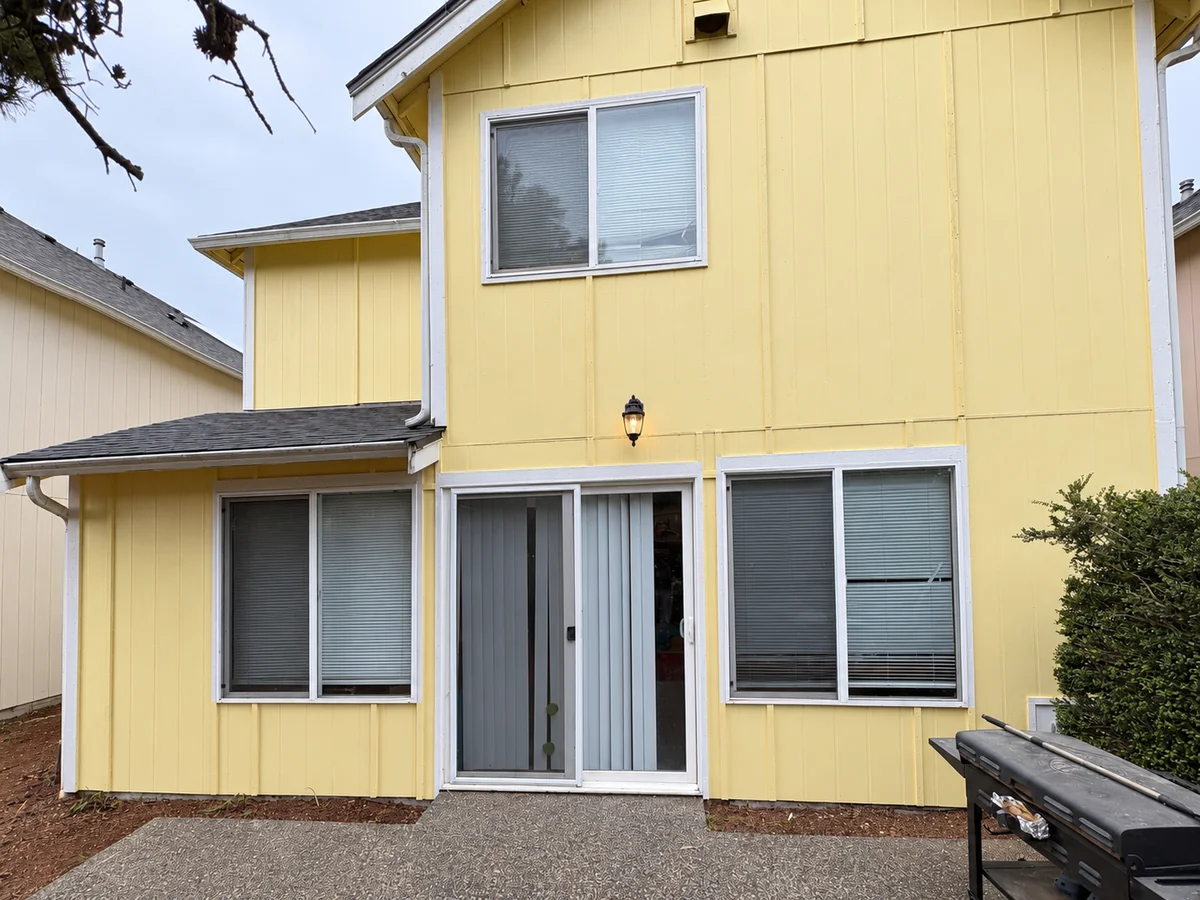
Where would the new siding end?
In the Lacey photo, the siding meets more than the next wall. A lower roof runs into it, and the window and patio door interrupt it. Those are useful places to point to during a walkthrough of your own home.
Behind the siding, a water-resistive layer and flashing direct rain back outside. Ask how those layers will connect at each opening and corner. Sometimes a strip of trim or siding on the next wall has to come off temporarily to make that connection. Have the proposal say who will put it back and finish it.
Will one new side match the old siding?
Bring a sample outside and hold it alongside the existing siding in daylight. On lap siding, compare the exposure, the height you see from one course to the next. A new board can be the right color and still cast a different shadow because its face is taller or its bottom edge is thicker. With vertical panels, compare the spacing of the grooves or battens instead.
Check the two sides together at a corner you see from the street. Weathering can change the color of older siding, and a discontinued panel may have no close replacement. Ask to see the proposed transition before ordering. Sometimes a full wall ending at a trim board looks more intentional than a handful of nearly matching pieces in the middle.
What to bring to John
Take a straight-on photo of the wall, a view around each corner, and one close-up of the area that concerns you. If you have a leftover piece or an old product label, bring it. Tell John when you first noticed the change and whether it looks different after rain.
If hidden damage turns up during removal, ask to see it and agree on the repair before the wall is closed. For a project that also includes windows or doors, see how to plan the order of the work.
For more on how flashing and the layer behind siding work together, see the Building America guidance for existing walls.