
Siding and exterior paint · Homeowner guide
Does peeling paint mean my siding needs replacing?
Peeling paint alone doesn’t mean you need new siding. On painted wood, the coating can lose its grip while the board underneath is still sound. The decision changes when the board itself has swollen, split or started to crumble, or the same spot keeps peeling after it’s repainted.
A fresh coat on a Port Orchard home.
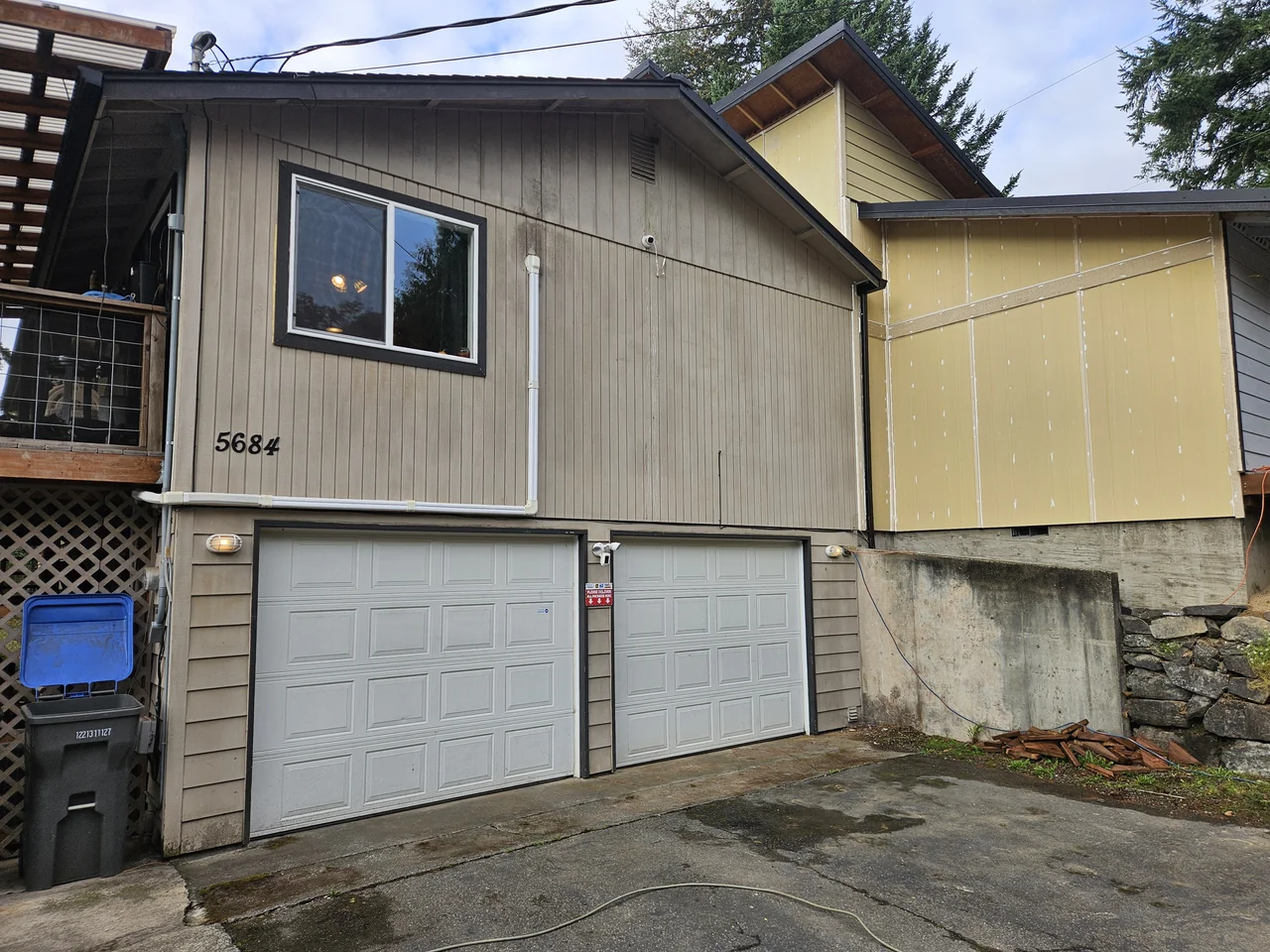
The vertical boards around the upstairs window give you a reference point for both photos.
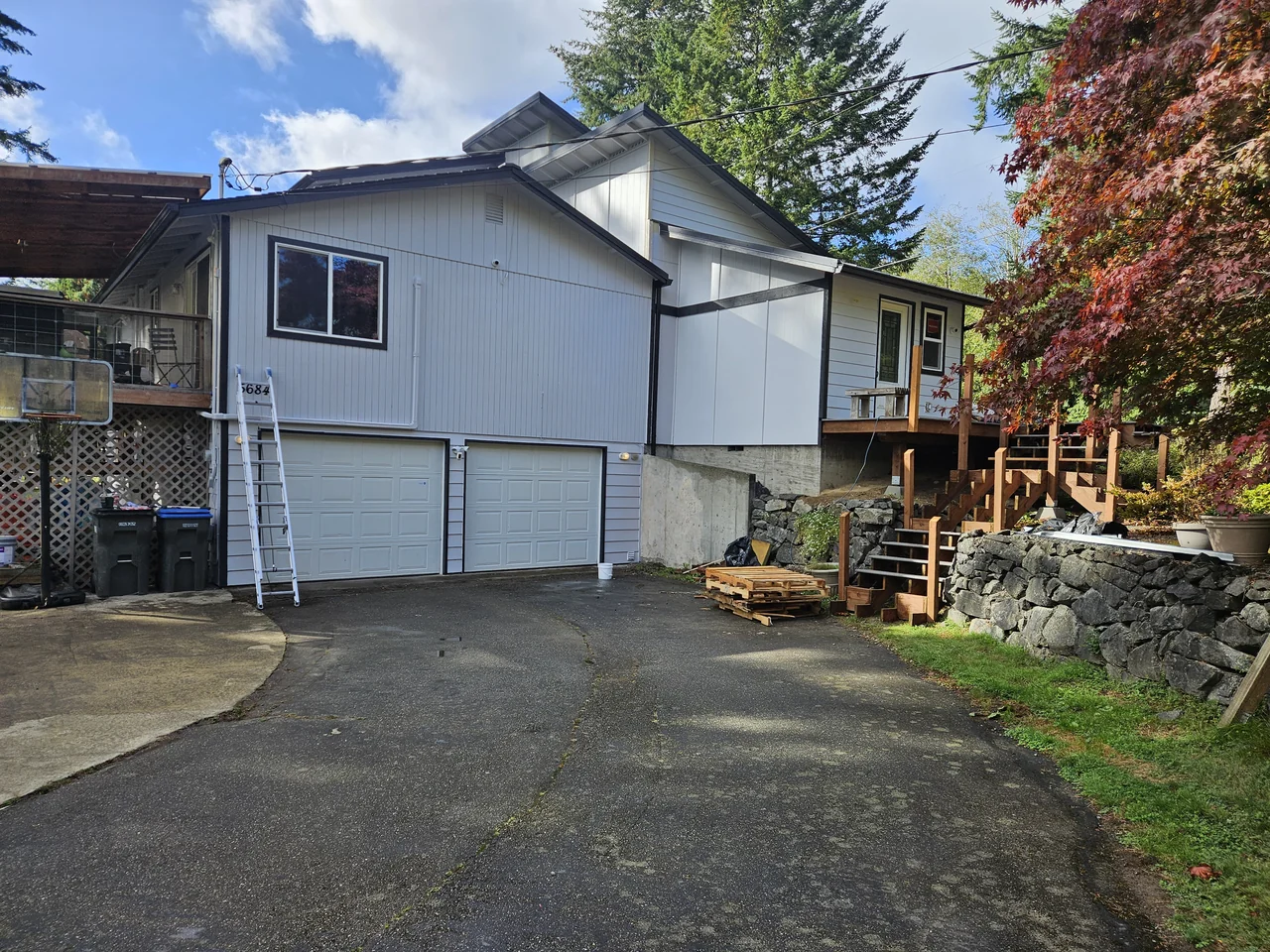
The light siding and dark trim are visible here while finishing work was still underway.
- Board face. Get close enough to show whether only the finish is lifting.
- Below a sill. Include the window and the patch beneath it in the same frame.
- Roof meets wall. Step back to show where rain from above could reach the area.
What can you see from the ground?
The finish is coming away
The paint lifts in flakes, but the face underneath looks intact and the board holds its shape. That’s a reason to have a painter assess the surface, its preparation and whether the wood is dry enough to refinish. A new coat will only last as well as the surface beneath it.
The board has changed shape
A frayed edge, bulging seam, missing material or a board pulling away is a reason to have the siding assessed before painting. The damaged area could be small. Its location and the condition of the adjoining boards help determine how much needs opening up.
Why is it always the same spot below the window?
One narrow patch that peels again after a fresh paint job deserves a different conversation from an entire sunny wall fading evenly. Rain may be reaching that area through a joint, or a gutter above may be spilling onto it. A photo of the peeling patch tells only part of the story. Step back and include the sill, trim and roof edge above it.
Those are clues for the walkthrough. The contractor can check how water leaves the opening, whether the visible board is sound, and whether anything behind it needs a closer look.
Which material is actually on the wall?
Look for an old invoice, leftover board or product label. Solid wood, engineered wood and fiber cement have different edges and refinishing instructions. For example, paint peeling from the face of a board is a different finding from the board’s layers separating at a cut end. Bring the product name if you have it so the proposed repair fits the material.
Who should I call first?
- Start with a painter when the concern is a worn coating across otherwise intact boards. Ask what preparation the quote includes and how they’ll check for moisture before repainting.
- Start with an exterior assessment when a board is deformed, the same patch repeatedly fails, or you’ve also noticed staining indoors. Ask what can be checked during the visit and what would require opening the wall.
If only a few boards need replacement, ask how the new pieces and finish will match. For damage that extends farther, see when replacing one side of the house makes sense.
Further reading: USDA Forest Products Laboratory guidance on finishing and maintaining exterior wood (PDF).